
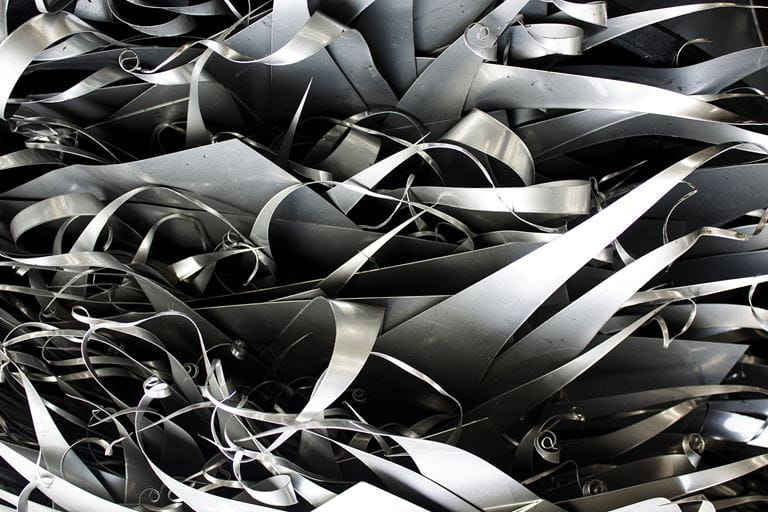
You hand over a boot full of copper pipe, an old washing machine, or a car that’s failed its last MOT. We weigh it, sort out payment, and off you go. Then what?
It’s a fair question, and one we’re asked more often than you might think. People want to know their scrap is actually being recycled, not quietly shipped off to landfill or handled in a way they’d rather not be part of.
This guide follows your metal through our scrap yard Belfast customers use every day, from the moment it crosses the weighbridge at Mallusk to the point it re-enters manufacturing somewhere in the world.
Step One: The Weighbridge
Everything that arrives at 50 Trench Road starts at the weighbridge. Whether you drop off in person or we collect from your home, farm or business, the load is weighed and recorded on arrival.
This does two things. It confirms exactly what you should be paid, and it gives us a record of every load that enters the site. In a regulated industry, that traceability matters. Every tonne we process can be accounted for.
Step Two: Inspection and Sorting
Once weighed, the load is inspected and sorted. Metal is divided into two broad families:
- Ferrous metals, meaning iron and steel. These are magnetic and include appliances, radiators, vehicle bodies, plant and structural steel.
- Non-ferrous metals, which are not magnetic and often carry higher value. Copper, brass, aluminium, stainless steel, lead and cables all fall into this group.
Our team then grades materials further. Clean copper pipe is separated from mixed grades, cables and electric motors go into their own streams, and anything with plastic, rubber or wood attached is set aside for stripping. The better the sorting at this stage, the more of each load ends up back in circulation.
If you’ve ever wondered why we suggest separating copper from general scrap before a drop-off, this is why. It speeds this stage up and helps your material go straight into the right stream.
Vehicles Take a Different Route: Depollution First
End-of-life vehicles are handled differently, and legally they have to be. As an Authorised Treatment Facility, we operate an on-site depollution system, so every vehicle that arrives to be scrapped is depolluted before anything else happens. Oils, fuels, coolant, brake fluid and the battery are all removed and stored safely, along with other hazardous components. Only then can the vehicle move on for dismantling and processing. If you want the full process from quote to collection, our step-by-step guide to how to scrap my car NI covers it in detail.
Once a vehicle is processed, the DVLA is notified and a Certificate of Destruction is issued, confirming the vehicle has been legally scrapped and the previous keeper is no longer responsible for it.
Under UK end-of-life vehicle rules, up to 95% of a vehicle’s materials can be reused or recycled when it’s processed correctly. That includes the steel shell, aluminium components, copper wiring, and plenty of the plastics and glass too.
Step Three: Processing
Sorted metal is then processed to prepare it for the next stage of its life. Depending on the material, that can mean cutting, baling, or shredding into consistent, transportable grades.
A steel radiator, a bundle of copper pipe and a dismantled car shell all leave our yard looking very different from how they arrived: dense, graded material that a mill or refinery can feed straight into production.
Step Four: Back Into Manufacturing
This is the part most people never see. We sell processed ferrous and non-ferrous metals to end users on a global scale, meaning steel mills, refineries and manufacturers who melt it down and turn it into new products. The copper from your old cables might end up in new wiring. The steel from a scrapped car can come back as construction beams, appliances or another vehicle entirely. Metal can go around this loop again and again without losing its core properties, which is what makes metal recycling Belfast households and businesses rely on genuinely circular rather than a one-off gesture.
The energy savings are real too. Recycling aluminium uses up to 95% less energy than producing it from raw ore, and the figures for steel and copper are substantial as well. Every load that comes through Mallusk reduces the need for mining somewhere else in the world.
Why Any of This Should Matter to You
If you’re clearing a garage or scrapping one car, it might feel like your load is a drop in the ocean. It isn’t, and there are practical reasons to care where your scrap goes:
- Traceability protects you. Businesses have a duty of care for their waste, and using a licensed facility means your scrap is accounted for if anyone ever asks.
- Proper depollution protects the environment. Fluids from a single vehicle can do real damage if they end up in the ground rather than a sealed depollution system.
- Correct paperwork protects vehicle keepers. A Certificate of Destruction removes your legal responsibility for a scrapped car. An informal collector cannot guarantee that.
- Sorted metal earns its full value. A yard that processes properly can recover more from each load, which is reflected in what materials are worth.
Questions We Hear About the Process
Does anything end up in landfill?
A small amount of genuinely non-recyclable residue can, but the overwhelming majority of what arrives here is recovered. Metal itself is almost entirely recyclable, and vehicle processing targets that 95% figure by design.
Do I need to sort my scrap before bringing it in?
No. Our team sorts everything on arrival. That said, keeping copper, brass and aluminium separate from general steel makes the process quicker and helps us grade your material accurately.
Can I see where my scrap goes?
You’re welcome to ask when you drop off. We’re happy to explain how a particular material is processed and where that grade typically ends up. For a broader picture of what we accept and how the yard works, our ultimate guide to metal recycling in Belfast is a good place to start.
What about items that are only partly metal?
Mixed items are fine. Appliances, cables and machinery with plastic or rubber attached are stripped and separated here, so the metal content still makes it back into circulation.
From Your Driveway to the Wider World
The next time you drop a load at our yard or book a collection, you’ll know exactly what happens after the weighbridge. Your scrap metal Belfast and beyond gets sorted, graded, processed and sold into manufacturing supply chains around the world, with every stage handled on a fully licensed site.
If you’ve got scrap building up at home, on the farm or at your business, we’d be glad to take it off your hands and put it back to work.
Drop in to 50 Trench Road, Mallusk, Newtownabbey BT36 4TY, call us on 028 9082 5362 (ext 4), email info@mckinstrymetalrecycling.co.uk, or get in touch to arrange a collection anywhere in Northern Ireland.
This guide was written by the team at McKinstry Metal Recycling. We work with households and businesses across Northern Ireland to recycle scrap metal responsibly from our Mallusk facility. Our team handles everything from small household scrap to large commercial loads.